
Table of Contents
If you’re thinking about installing a new concrete driveway or replacing an old, cracked one, cost is probably the first thing on your mind. Concrete is one of the most popular driveway materials in the United States for good reason — it’s durable, versatile, and offers a clean, polished look that can last for decades when properly maintained. But how much should you actually expect to pay in 2026?
In this comprehensive pricing guide, we’ll break down everything you need to know about concrete driveway costs — from national averages and per-square-foot pricing to the hidden factors that can push your project over budget. Whether you’re planning a simple broom-finish slab or a decorative stamped masterpiece, you’ll walk away knowing exactly what to expect before you request your first quote.
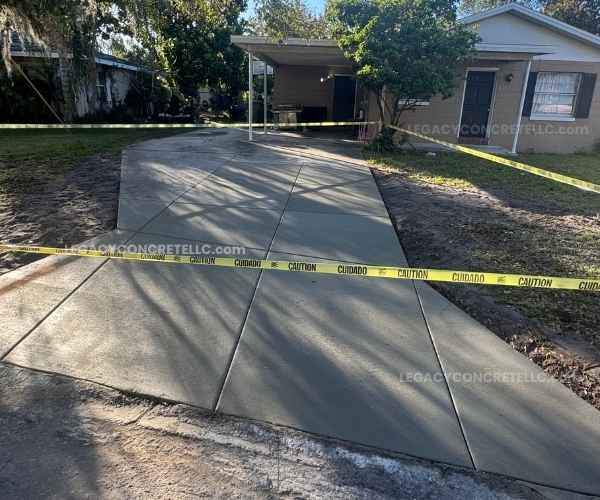
National Average Cost for a Concrete Driveway in 2026
As of 2026, the national average cost to install a concrete driveway ranges from $4,500 to $9,500 for a standard two-car driveway (approximately 400–600 square feet). The median cost most homeowners report paying is around $6,500.
However, pricing can vary significantly depending on your location, the complexity of the project, the type of concrete finish you select, and current material costs. In high cost-of-living areas or regions experiencing construction booms, prices can exceed $12,000 or more for the same square footage.
Here’s a quick snapshot:
- Low end: $3,000–$4,500 (basic broom finish, small single-car driveway)
- Mid-range: $5,000–$8,000 (standard two-car driveway, basic finish)
- High end: $9,000–$18,000+ (large driveways, stamped or decorative concrete, complex site prep)
These numbers include labor, materials, basic site preparation, and finishing. They typically do not include demolition and removal of an existing driveway, extensive grading, or decorative upgrades — all of which we’ll cover in detail below.
Cost Per Square Foot by Finish Type
One of the easiest ways to estimate your concrete driveway cost is by looking at price per square foot. In 2026, here’s what you can expect to pay based on the type of finish you choose:
Basic Broom Finish — $6 to $10 per square foot
This is the most common and affordable option. A broom finish involves dragging a broom across the surface of freshly poured concrete to create a textured, slip-resistant surface. It’s functional, clean, and gets the job done without any decorative frills. Most residential driveways use this finish.
Exposed Aggregate — $10 to $18 per square foot
Exposed aggregate concrete reveals the natural stones and pebbles within the concrete mix, creating a textured, visually interesting surface. It’s more slip-resistant than smooth concrete and adds a decorative element without the premium cost of stamping. It requires a skilled contractor to execute properly.
Stamped Concrete — $12 to $22 per square foot
Stamped concrete is designed to mimic the appearance of natural stone, brick, slate, or tile. After the concrete is poured, patterns are stamped into the surface before it fully cures. Color is typically added through integral pigments or surface-applied color hardeners. This is the premium option for homeowners who want the look of expensive materials without the associated price tag.
Stained or Colored Concrete — $8 to $16 per square foot
Adding color to your concrete driveway — either through integral color mixed into the concrete itself or through acid/water-based stains applied to the surface — can dramatically change the look of your driveway. Costs depend on whether you’re combining staining with other techniques like stamping.
Polished Concrete — $10 to $20 per square foot
While less common for driveways than interior floors, polished concrete is gaining popularity in modern home designs. It creates a sleek, reflective surface that looks stunning but may require additional sealant for outdoor durability and slip resistance.
Factors That Affect Your Concrete Driveway Cost
The per-square-foot pricing above gives you a starting point, but several factors can push your final cost higher or lower. Understanding these variables will help you budget more accurately and avoid surprises when quotes come in.
1. Driveway Size and Shape
This is the most obvious factor. A larger driveway costs more simply because it requires more materials and labor. However, shape complexity also matters. A straight, rectangular driveway is the most affordable to pour. Curved driveways, circular turnarounds, or driveways with multiple angles require more formwork, more precise grading, and more skilled labor — all of which add to the cost.
Typical driveway sizes:
- Single-car driveway (200–300 sq ft): $1,200–$3,000
- Two-car driveway (400–600 sq ft): $4,500–$9,500
- Three-car or extended driveway (600–900 sq ft): $7,000–$15,000+
2. Concrete Thickness
Standard residential driveways are poured at 4 inches thick, which is suitable for passenger cars, SUVs, and light trucks. However, if you expect heavier vehicles (RVs, boats on trailers, commercial vehicles), your contractor may recommend 5 to 6 inches of thickness, which increases material costs by 25–50%.
The cost of concrete itself in 2026 averages $130 to $160 per cubic yard, depending on your region and the specific mix design. A thicker pour means more cubic yards of concrete, more reinforcement, and potentially a stronger sub-base — all adding to the bottom line.
3. Site Preparation and Grading
Before concrete can be poured, the site needs to be properly prepared. This includes:
- Clearing and excavation: Removing vegetation, topsoil, and debris
- Grading: Ensuring proper slope for water drainage (typically 1/8 inch per foot minimum)
- Sub-base installation: Compacting gravel or crushed stone (usually 4–6 inches) to provide a stable foundation
- Formwork: Building the wooden or metal forms that hold the concrete in place during the pour
If your property has significant slope, poor soil conditions (clay, organic material, high water table), or requires extensive excavation, site prep costs can add $1,000 to $4,000+ to your project. Properties with good drainage and relatively flat terrain will see much lower prep costs.
4. Removal of Existing Driveway
If you’re replacing an old concrete, asphalt, or gravel driveway, demolition and removal costs need to be factored in. Expect to pay:
- Concrete removal: $3 to $6 per square foot
- Asphalt removal: $2 to $4 per square foot
- Gravel removal/regrading: $1 to $3 per square foot
For a 500 sq ft concrete driveway removal, that’s an additional $1,500 to $3,000 before any new concrete is even poured. Some contractors offer a discount when you bundle removal with a new pour, so always ask.
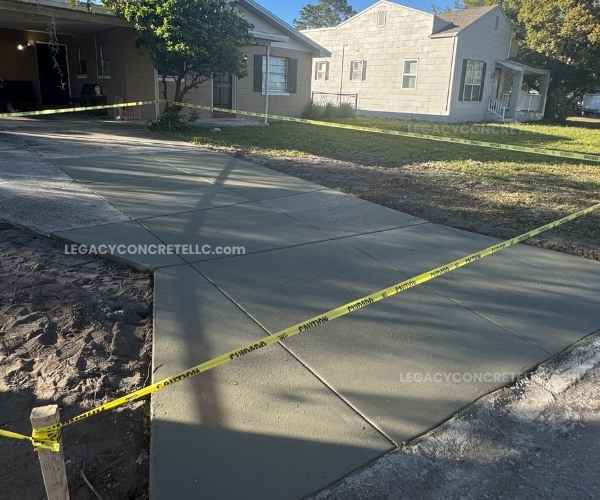
5. Reinforcement
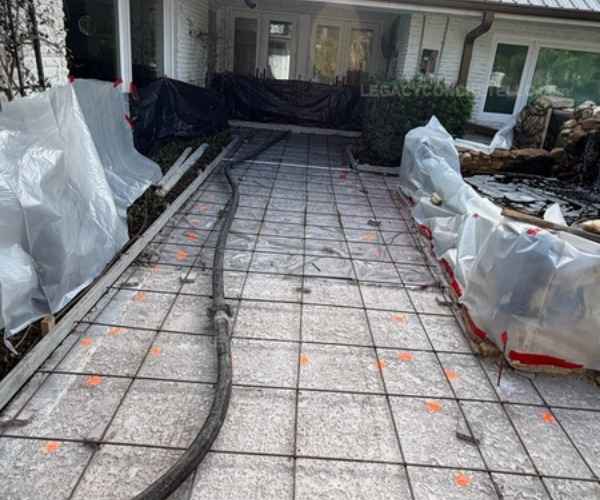
Concrete driveways benefit significantly from reinforcement, which helps prevent cracking and increases the lifespan of your concrete slab. Common reinforcement options include:
- Wire mesh: $0.50–$1.00 per square foot (standard for most residential driveways)
- Rebar grid: $1.50–$3.00 per square foot (recommended for heavy loads or problematic soil)
- Fiber mesh (mixed into concrete): $0.50–$1.50 per square foot (an alternative to traditional wire mesh)
Most contractors include basic wire mesh reinforcement in their standard quotes, but confirm this before signing a contract.
6. Labor Costs and Regional Pricing
Labor is a significant portion of any concrete driveway project — typically 40–60% of the total cost. Labor rates vary dramatically by region:
- Southeast and Midwest: Generally the most affordable, with labor rates 10–20% below national average
- Northeast: Moderate to high, especially in metro areas
- West Coast and Pacific Northwest: Higher labor costs, often 15–30% above national average
- Mountain West (Colorado, Utah): Rising costs due to population growth and construction demand
In cities like Portland, Seattle, San Francisco, and Los Angeles, you can expect to pay a premium due to higher wages, stricter permitting requirements, and increased demand for skilled concrete contractors.
7. Permits and Inspections
Many municipalities require a permit for driveway installation or replacement, especially if you’re changing the footprint, altering drainage patterns, or working near the street right-of-way. Permit costs typically range from $50 to $500 depending on your jurisdiction.
Some areas also require inspections at various stages — after excavation, after reinforcement placement, and after the pour. While these don’t usually add significant direct costs, they can extend your project timeline.
8. Drainage Solutions
Proper drainage is critical for concrete driveway longevity. If your property requires additional drainage solutions beyond basic grading, costs can increase:
- Channel drains: $500–$2,000
- French drains along driveway edges: $1,000–$3,000
- Catch basins: $300–$800 each
- Regrading surrounding landscape: $500–$2,500
A good contractor will assess your drainage needs during the quoting process and include necessary solutions in their estimate.
9. Finishing Touches and Add-Ons
Several optional additions can enhance your driveway’s appearance, functionality, and longevity:
- Decorative borders: $5–$15 per linear foot
- Sealing: $1.50–$3.00 per square foot (highly recommended for longevity)
- Heated driveway systems (radiant heat): $12–$25 per square foot (popular in cold climates)
- Expansion joints with decorative saw cuts: $2–$5 per linear foot
- Integral color: $1.50–$3.00 per square foot added to base cost
- Apron/flare at street connection: $500–$1,500
Regional Pricing Differences Across the United States
To give you a more localized picture, here’s how concrete driveway costs (for a standard 500 sq ft, broom-finish driveway) break down by region in 2026:
Pacific Northwest (Oregon, Washington)
- Average cost: $6,000–$9,500
- Notes: Higher labor costs, seasonal limitations due to rain, strong demand in growing metro areas like Portland and Gresham
California
- Average cost: $7,000–$12,000
- Notes: Highest labor costs in the nation, strict permitting, seismic considerations in some areas
Southwest (Arizona, Nevada, New Mexico)
- Average cost: $4,500–$7,500
- Notes: Year-round pouring season, lower labor costs, but extreme heat requires special curing techniques
Midwest (Ohio, Indiana, Illinois, Iowa)
- Average cost: $4,000–$7,000
- Notes: Moderate labor costs, freeze-thaw cycles require air-entrained concrete mixes
Southeast (Georgia, Florida, Carolinas)
- Average cost: $4,000–$6,500
- Notes: Lower labor costs, long pouring season, but high humidity can affect curing
Northeast (New York, New Jersey, Connecticut, Massachusetts)
- Average cost: $6,500–$10,000
- Notes: High labor costs, short pouring season, freeze-thaw considerations, expensive permits in some municipalities
Mountain West (Colorado, Utah, Montana)
Average cost: $5,500–$9,000
Notes: Rapidly growing markets, elevation and temperature swings require specialized mixes
When Is the Best Time to Get Quotes and Schedule Your Pour?
Timing can significantly impact both pricing and availability. Here’s what to consider:
Late winter/early spring (February–April): This is the ideal time to start gathering quotes. Many contractors are finalizing their schedules for the busy season and may offer competitive pricing to fill their calendar. You’ll have more flexibility in scheduling and may avoid the rush.
Late spring/summer (May–August): This is peak season for concrete work in most of the country. Contractors are busiest, lead times are longest (often 4–8 weeks), and pricing may be at its highest due to demand. However, weather conditions are generally ideal for curing.
Fall (September–November): A sweet spot in many regions. Demand begins to taper, some contractors offer end-of-season pricing, and temperatures are still suitable for concrete work in most areas.
Winter (December–January): In warmer climates, this can be an excellent time to pour — lower demand means better pricing and faster scheduling. In cold climates, concrete work is generally n
How to Vet Concrete Contractors Before Hiring
Getting a fair price is important, but hiring the right contractor is even more critical. A poorly installed concrete driveway can crack, settle, or deteriorate within just a few years — costing you thousands in repairs or replacement. Here’s how to vet your contractor:
Check licensing and insurance. Every concrete contractor should carry general liability insurance (minimum $1 million) and workers’ compensation coverage. Verify their contractor’s license is current and in good standing with your state licensing board.
Ask for references and recent photos. A reputable contractor should be able to provide at least 3–5 references from recent driveway projects. Ask to see photos of work completed 2–3 years ago — this shows how their concrete holds up over time, not just how it looks on pour day.
Get multiple quotes. We recommend getting at least 3 written quotes from different contractors. Be wary of quotes that are dramatically lower than others — this often indicates the contractor is cutting corners on materials, thickness, reinforcement, or proper site preparation.
Review the contract carefully. A professional quote should itemize:
- Square footage and thickness
- Concrete mix design (PSI rating, air entrainment)
- Reinforcement type
- Sub-base specifications
- Finish type
- Timeline and payment schedule
- Warranty terms
Verify their experience with your specific project type. If you want stamped concrete, make sure the contractor specializes in decorative work — not every concrete contractor has the skill set for premium finishes.
Look for red flags:
- No written contract or vague verbal agreements
- Demanding full payment upfront (standard is 10–30% deposit, balance upon completion)
- No physical business address
- Unwillingness to pull permits
- Pressure to make immediate decisions
Understanding the Long-Term Value of a Concrete Driveway
While the upfront cost of a concrete driveway may seem significant, it’s important to consider the long-term value compared to alternatives:
Lifespan: A properly installed and maintained concrete driveway can last 30–50 years. Compare this to asphalt (15–20 years with regular sealing) or gravel (requires annual replenishment and grading).
Maintenance costs: Concrete requires minimal ongoing maintenance — occasional cleaning and resealing every 3–5 years ($200–$500 per application). Asphalt requires seal coating every 2–3 years and is more susceptible to damage from oil, gasoline, and UV exposure.
Return on investment: A new concrete driveway can increase your home’s curb appeal and property value. Real estate studies suggest a well-maintained driveway contributes to a 5–10% improvement in perceived home value, which can translate to thousands of dollars at resale.
Cost per year of use: When you divide the total installation cost by the expected lifespan, concrete often comes out to just $150–$300 per year — making it one of the most cost-effective long-term investments in your home’s exterior.
DIY vs. Professional Installation: Is It Worth Doing Yourself?
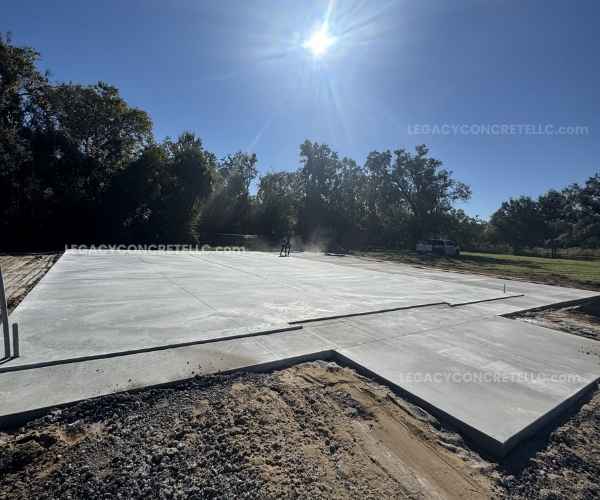
Some homeowners consider pouring their own concrete driveway to save money. While DIY is possible for very small slabs or pads, a full driveway pour is generally not recommended as a DIY project for several reasons:
The logistics are complex. A 500 sq ft driveway at 4 inches thick requires approximately 6.2 cubic yards of concrete — that’s a full concrete truck delivery that needs to be placed, spread, screeded, floated, and finished within a tight window before the concrete begins to set. You typically have 60–90 minutes from the time the truck arrives to complete the pour.
Proper finishing requires skill. Achieving a smooth, level surface with appropriate texture and slope for drainage requires experience. Mistakes made during finishing are permanent — you can’t easily fix them once the concrete begins to cure.
Sub-base preparation is critical. Improper compaction, insufficient gravel depth, or poor drainage planning will lead to settling, cracking, and premature failure — regardless of how well the concrete itself is poured.
The cost savings may be minimal. After renting equipment (vibrating plate compactor, bull float, edging tools, screeds), purchasing forms and materials, and accounting for the concrete itself, DIY savings are often only 20–30% compared to hiring a professional. Given the risk of costly mistakes, most homeowners find that professional installation provides far better value.
When DIY might make sense: Small extension pads, walkways under 100 sq ft, or practice slabs in non-visible areas where imperfections are acceptable.
How to Save Money on Your Concrete Driveway Project
If budget is a concern, here are legitimate ways to reduce your concrete driveway cost without sacrificing quality:
1. Choose a simple design.
Straight, rectangular driveways with a basic broom finish are the most affordable to install. Every curve, angle, or decorative element adds cost.
2. Keep the standard thickness.
Unless you have specific heavy-vehicle needs, 4 inches is perfectly adequate for residential use. Don’t let a contractor upsell you to 6 inches unless there’s a legitimate engineering reason.
3. Do your own demolition.
If you’re replacing an existing driveway, breaking up and removing the old material yourself can save $1,500–$3,000. Rent a jackhammer and a dumpster — it’s hard work but straightforward.
4. Schedule in the off-season.
Booking your project in late fall or early spring (weather permitting) may get you better pricing when contractors have lighter schedules.
5. Bundle with neighbors.
If neighbors also need concrete work, approaching a contractor together can sometimes yield volume discounts since mobilization costs are shared.
6. Get multiple quotes.
This cannot be overstated. Pricing can vary by 30–50% between contractors for the same project. Three to five quotes give you a clear picture of fair market pricing.
7. Maintain what you have.
If your existing driveway has minor cracks or surface wear but is structurally sound, resurfacing ($3–$7 per square foot) may extend its life another 10–15 years at a fraction of replacement cost.
Concrete Driveway Costs: Frequently Asked Questions
How much does a concrete driveway cost per square foot in 2026?
Basic broom-finish concrete driveways cost $6–$10 per square foot. Decorative options like stamped or exposed aggregate range from $10–$22 per square foot.
Is concrete cheaper than asphalt for a driveway?
Concrete has a higher upfront cost (typically 30–50% more than asphalt), but its longer lifespan and lower maintenance costs often make it more affordable over 20+ years.
How long does a concrete driveway last?
With proper installation and maintenance, a concrete driveway can last 30–50 years. Climate, usage, and maintenance practices all affect longevity.
Can you pour concrete over an existing driveway?
In some cases, yes — this is called an overlay. However, it requires the existing surface to be structurally sound and adds height that may affect garage entry or drainage. Consult a professional for assessment.
How long before I can drive on new concrete?
Most contractors recommend waiting at least 7 days for passenger vehicles and 30 days for heavier vehicles or equipment. Concrete reaches approximately 70% of its full strength at 7 days and 99% at 28 days.
Do I need to seal my new concrete driveway?
Yes: sealing is highly recommended, typically after 30 days of curing. Sealing protects against moisture penetration, staining, freeze-thaw damage, and UV degradation. Plan to reseal every 3–5 years.
Final Thoughts: Budgeting for Your 2026 Concrete Driveway
A concrete driveway is a significant investment in your home — but it’s one that pays dividends in durability, curb appeal, and property value for decades to come. By understanding the cost factors outlined in this guide, you’ll be equipped to budget accurately, ask the right questions, and make informed decisions when comparing contractor quotes.
To recap your 2026 budgeting numbers:
- Basic driveway (broom finish, 500 sq ft): $3,000–$5,000
- Standard driveway (broom finish, two-car, 500 sq ft): $4,500–$9,500
- Premium driveway (stamped/decorative, 500 sq ft): $8,000–$15,000+
- Add demolition/removal of existing driveway: $1,500–$3,000
- Add sealing: $750–$1,500
The best thing you can do right now is start gathering quotes from qualified, licensed concrete contractors in your area. Provide each contractor with the same project specifications so you can make true apples-to-apples comparisons.
Ready to find a trusted concrete contractor near you?
Connect with experienced, vetted professionals in your area who specialize in residential driveway installation. Get free quotes today and take the first step toward a beautiful, long-lasting concrete driveway that adds value to your home for years to come.
Last updated: May 2026. Pricing data reflects national averages and may vary by location. Always obtain local quotes for the most accurate project estimates.
Share this content: