
Table of Contents
Choosing the right material for your driveway, patio, or pool deck is one of the biggest decisions a Florida homeowner will make when upgrading their outdoor space. In a state defined by intense heat, high humidity, sandy soil, and torrential summer downpours, the concrete vs. pavers debate isn’t just about looks—it’s about long-term performance, cost, and how well your investment holds up against the elements.
This guide breaks down the real differences between the two materials, weighs the practical pros and cons, and helps you decide which option makes the most sense for your Winter Haven or Central Florida home.
Why Material Choice Matters More in Florida
Florida’s climate puts hardscaping through a unique kind of stress. According to the National Weather Service, Central Florida receives roughly 50 inches of rain per year, with the bulk falling between June and September. That heavy, concentrated rainfall means drainage and water resistance are critical factors—not afterthoughts.
Add to that the state’s expansive, sandy, and sometimes shifting soils, and you have ground that moves more than in many other parts of the country. Surface temperatures on driveways and pool decks in Florida can climb well above 120°F during peak summer, and the constant freeze-free but UV-heavy environment ages materials differently than colder climates.
All of this means the pavers vs. concrete decision has real consequences for how your surface performs over 10, 20, or 30 years.
Understanding Your Two Main Options
Before comparing them head-to-head, it helps to understand what each material actually is.
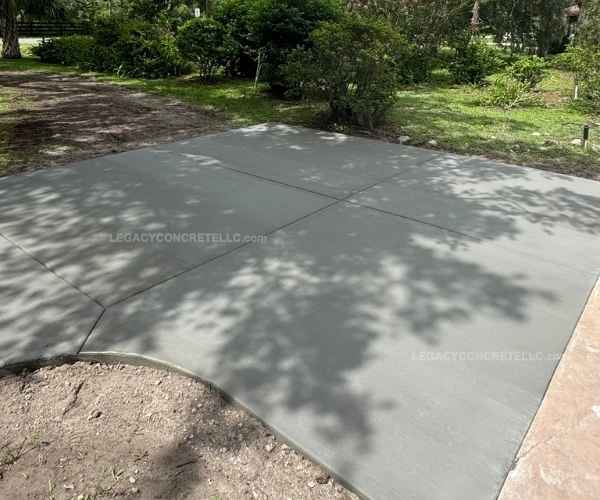
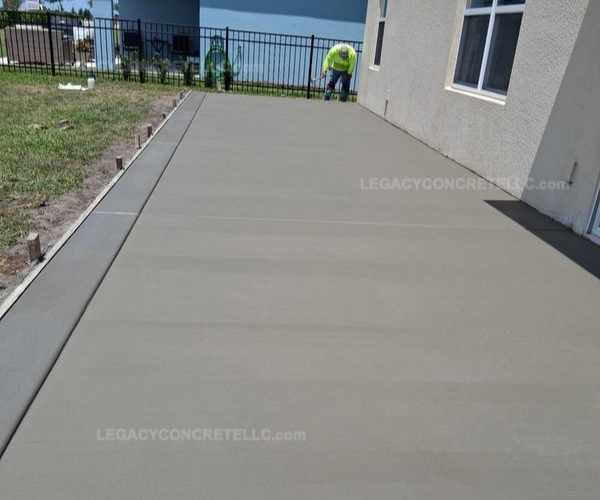
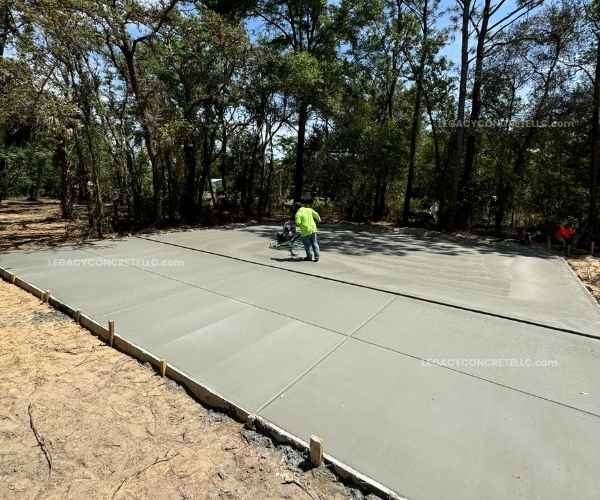
Poured concrete is a mixture of cement, sand, aggregate, and water that is poured onto a prepared base and finished as a single continuous slab. It can be left plain (broom-finished) or upgraded with decorative techniques like stamping and staining.
Pavers are individual pre-manufactured units—typically made from concrete, brick, or natural stone—that are laid piece by piece over a compacted base and sand setting bed. The joints between pavers are filled with sand, allowing slight flexibility and drainage.
This fundamental difference—one solid slab versus many interlocking pieces—drives nearly every advantage and disadvantage that follows.
Cost of Pavers vs. Concrete: What to Expec
For most homeowners, budget is the starting point. Here’s how the cost of pavers vs. concrete typically breaks down in the Central Florida market.
Standard poured concrete is the most affordable option, generally running $6 to $12 per square foot installed in the Winter Haven area, depending on thickness, site prep, and finish.
Pavers sit at the higher end, usually $12 to $22 per square foot installed, because of the labor-intensive process of laying each unit and preparing the base.
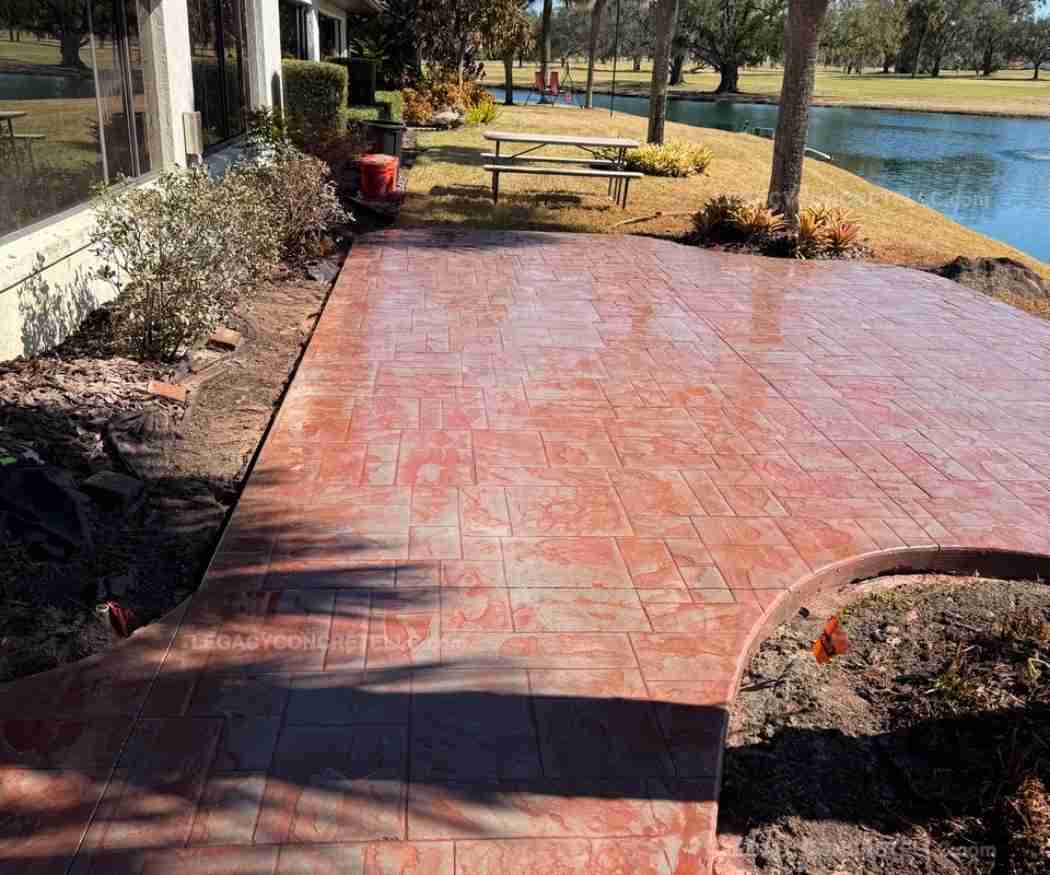
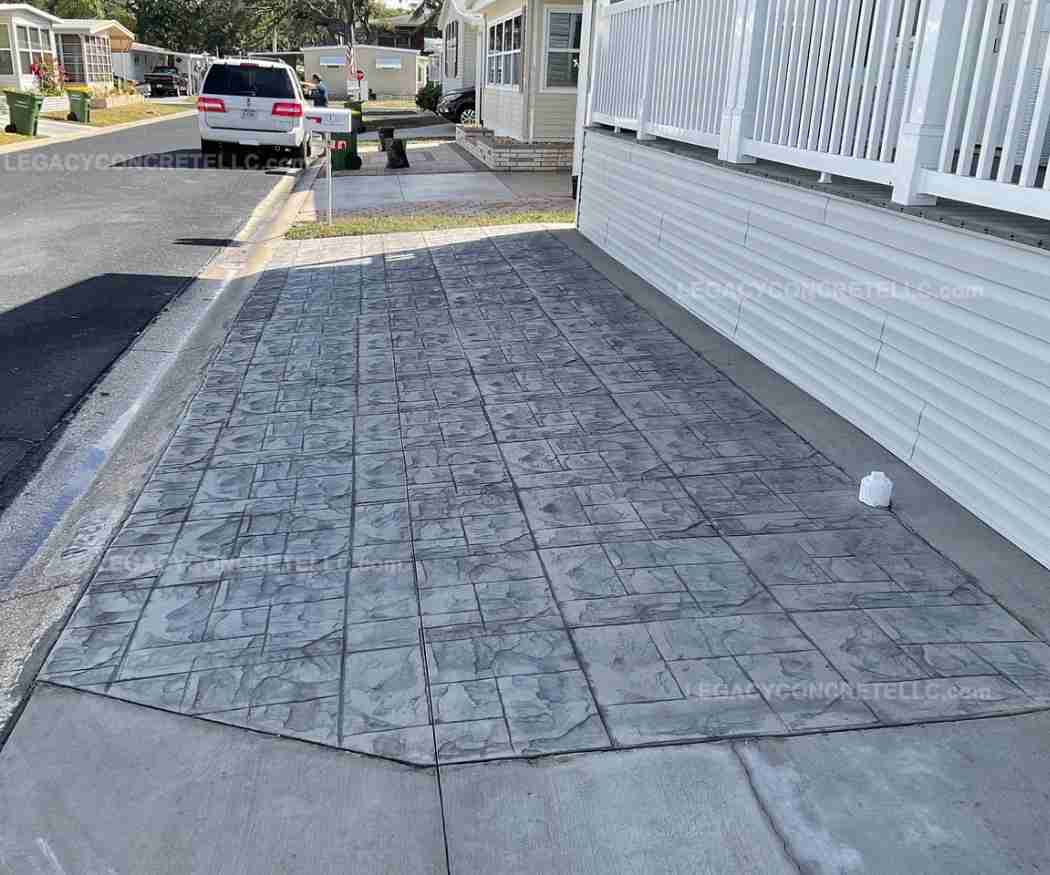
Stamped concrete falls in the middle. When comparing stamped concrete patio vs. pavers, decorative stamped concrete typically costs $10 to $18 per square foot—more than plain concrete but often slightly less than a full paver installation. The stamped concrete vs. pavers cost gap narrows further once you factor in long-term repairs, which we’ll cover below.
So on upfront cost of pavers vs. concrete driveway comparisons alone, concrete clearly wins. But initial price only tells part of the story.
Concrete vs. Pavers Pros and Cons
Let’s look at how each material performs across the factors that matter most to Florida homeowners.
Durability and cracking
This is where the concrete vs. pavers conversation gets interesting. A poured concrete slab is strong, but because it’s one continuous piece, it has no room to move. When Florida’s sandy soil shifts or heavy rain undermines the base, concrete tends to crack—and those cracks are permanent unless the section is cut out and repoured.
Pavers, by contrast, flex with the ground. If soil settles, individual pavers may sink slightly, but the surface rarely “cracks” the way a slab does. Many manufacturers back pavers with lifetime warranties, which speaks to their resilience. For homeowners asking are pavers better than concrete, durability is often the deciding factor in their favor.
Heat and comfort
Around pools and patios, surface temperature matters. Standard gray concrete and many pavers can get uncomfortably hot underfoot. However, lighter-colored pavers and specialty “cool” pavers are designed to reflect heat, making them a popular choice for pool decks. Stamped concrete can be sealed with lighter tones as well, but dark stains absorb more heat.
Maintenance
Concrete is low-maintenance day to day—occasional cleaning and resealing every few years. But when it fails, repairs are costly and visually obvious, since patched concrete rarely matches the original.
Pavers require a bit more routine upkeep—weeds or ants can occasionally appear in joints, and joint sand may need replenishing. The major upside is repairability: if one paver cracks or stains, you simply lift and replace that single unit. This makes pavers vs. concrete driveway maintenance far more forgiving over decades.
Drainage
In a state that gets pounded by summer storms, drainage is huge. The sand-filled joints between pavers allow water to permeate through the surface, reducing pooling and runoff. A solid concrete slab sheds water to the edges, which can contribute to standing water or erosion if not graded perfectly. For flood-prone Central Florida properties, permeable pavers offer a genuine performance edge.
Appearance and design
Pavers offer the widest range of colors, patterns, shapes, and textures, delivering a high-end, custom look that many buyers love. Stamped concrete has closed much of the aesthetic gap, mimicking brick, slate, or stone at a lower price point. Plain concrete is functional but visually basic.
Resale value
Curb appeal drives home value, and pavers—along with well-executed stamped concrete—tend to boost perceived property value more than plain gray slabs. In competitive Florida real estate markets, an attractive paver driveway or patio can be a legitimate selling point.
Stamped Concrete vs. Pavers in Florida: A Closer Look
Because stamped concrete has become so popular, it deserves special attention in the stamped concrete vs. pavers in Florida discussion.
Stamped concrete gives you the decorative appeal of pavers—patterns, textures, and color—in a single poured surface, often at a lower installed price. It’s a smart middle-ground choice for homeowners who want style without the top-tier paver budget.
However, stamped concrete shares concrete’s core weakness: it can crack. And when it does, the decorative pattern makes repairs even harder to disguise. Stamped surfaces also require resealing every two to three years to maintain color and protect against Florida’s UV exposure and rain.
So in the stamped concrete patio vs. pavers matchup, stamped concrete wins on initial cost and installation speed, while pavers win on long-term repairability and flexibility. Your priority—upfront savings versus lifetime performance—should guide the choice.
Concrete vs. Pavers Patio: Which Suits Your Outdoor Living Space?
Patios are all about lifestyle, so the concrete patio vs. pavers decision often comes down to how you use the space.
If you’re building a large, simple patio on a budget and plan to furnish it with rugs and furniture, a broom-finished or stamped concrete patio delivers excellent value. It’s fast to install and provides a clean, continuous surface.
If you envision an entertaining hub—an outdoor kitchen, fire pit, or resort-style pool deck—pavers create a premium, cohesive look that ties everything together. Their slip resistance and cooler surface options also make them ideal around water. For many Florida homeowners, the concrete vs. pavers patio choice ultimately favors pavers when outdoor living is a top priority.
Pavers vs Concrete Driveway: Handling Florida Conditions
Driveways face the toughest test: constant vehicle weight, sun exposure, and water runoff.
A concrete driveway is a proven, budget-friendly workhorse, but the pavers vs. concrete driveway comparison highlights concrete’s tendency to crack under Florida’s shifting soils and heavy loads. Once cracks spread, they only widen with time.
Paver driveways distribute weight across interlocking units and flex with ground movement, resisting the wholesale cracking that plagues slabs. They cost more upfront, but they often outlast concrete and maintain their appearance far longer—an important consideration given that a driveway is one of the first things visitors and buyers see.
Florida Statistics Worth Knowing
A few data points help put this decision in context for local homeowners:
- Florida is one of the fastest-growing states in the U.S., with the Census Bureau reporting hundreds of thousands of new residents annually—fueling strong demand for new driveways, patios, and outdoor upgrades across Polk County and beyond.
- Central Florida’s roughly 50 inches of annual rainfall makes drainage-friendly surfaces like permeable pavers especially valuable.
- Outdoor living remodels consistently rank among the highest return-on-investment home improvements, with the hardscaping and landscaping sector representing a multibillion-dollar market nationally—and Florida’s year-round outdoor lifestyle amplifies that demand.
- Summer surface temperatures exceeding 120°F on paved areas underscore why heat-reflective material choices matter for pool decks and patios in the Sunshine State.
So, Which Is Better for Your Home?
There’s no single winner in the concrete vs. pavers debate—the right choice depends on your goals.
Choose concrete if you want the lowest upfront cost, a quick installation, and a functional surface, and you’re comfortable with the risk of cracking over time. Stamped concrete is a strong compromise if you want style on a tighter budget.
Choose pavers if you prioritize long-term durability, easy repairs, superior drainage, cooler surfaces, and maximum curb appeal—and you’re willing to invest more upfront for lasting value.
For Florida’s demanding climate, many homeowners find that pavers deliver the best long-term performance, while concrete remains the go-to for value-driven projects. The smartest move is to weigh your budget, your timeline, and how long you plan to stay in your home—then match the material to your priorities.
Whatever you choose, working with an experienced Winter Haven hardscaping professional ensures proper base preparation and grading, which—more than the material itself—determines how well your driveway or patio will perform for decades to come.
Frequently Asked Questions: Concrete vs. Pavers in Polk County, FL
Are pavers better than concrete in Florida?
For most Florida homeowners, pavers offer better long-term performance than concrete. Because pavers are individual interlocking units, they flex with Polk County’s sandy, shifting soils and resist the cracking that commonly affects poured concrete slabs. Pavers also drain better during heavy summer rains and are easy to repair—damaged units can be replaced individually. Concrete, however, remains the better choice when upfront budget is the top priority.
How much does a paver driveway cost in Winter Haven, FL?
A paver driveway in the Winter Haven and Polk County area typically costs $12 to $22 per square foot installed. The final price depends on the paver type, driveway size, base preparation, and design complexity. By comparison, a standard poured concrete driveway usually runs $6 to $12 per square foot, making concrete the more budget-friendly upfront option.
What lasts longer, pavers or concrete?
Pavers generally last longer than concrete in Florida’s climate. Quality pavers can last 30 or more years and often come with lifetime warranties, while poured concrete typically lasts 20 to 30 years before cracking becomes a significant issue. Because pavers flex with ground movement instead of cracking, they tend to maintain their appearance and function longer in Polk County’s sandy soil condi
Do pavers crack like concrete?
No, pavers rarely crack the way concrete does. Since pavers are separate units laid over a flexible sand base, they shift slightly with the ground rather than cracking across the surface. If a single paver is damaged, it can be lifted and replaced individually. A concrete slab, by contrast, is one solid piece that cracks permanently when the soil beneath it mov
Which is better for a Florida pool deck—pavers or concrete?
Pavers are usually the better choice for Florida pool decks. Light-colored and specialty “cool” pavers reflect heat and stay more comfortable underfoot in the Winter Haven summer sun, and their textured surface offers better slip resistance around water. The permeable joints between pavers also allow water to drain quickly, reducing standing water and puddles around your pool.
Is stamped concrete cheaper than pavers?
Yes, stamped concrete is generally cheaper than pavers. In Polk County, stamped concrete typically costs $10 to $18 per square foot, while pavers run $12 to $22 per square foot. Stamped concrete gives you a decorative, patterned look at a lower upfront price, but it can still crack over time and requires resealing every two to three years to protect against Florida’s UV and rain.
Do pavers hold up in Florida's heat and humidity?
Yes, pavers hold up very well in Florida’s heat and humidity. They are manufactured to resist UV fading and moisture, and their interlocking design accommodates thermal expansion without cracking. For added comfort in Winter Haven’s intense summer heat, many homeowners choose lighter-colored or heat-reflective pavers for patios and pool decks.
What is the best driveway material for Florida's climate?
The best driveway material for Florida depends on your budget and priorities. Pavers are ideal for durability, drainage, and curb appeal in Polk County’s rainy, sandy conditions, while poured concrete is best for homeowners seeking a lower-cost, quick-to-install surface. Stamped concrete offers a middle-ground option with decorative appeal at a more affordable price than full pavers.
How does Florida rain affect concrete and pavers?
Florida’s heavy rainfall—roughly 50 inches per year in Central Florida—affects the two materials differently. Concrete slabs shed water to the edges, which can cause pooling or erosion if the surface isn’t graded perfectly. Pavers have sand-filled joints that let water permeate through the surface, improving drainage and reducing standing water. This makes permeable pavers especially valuable for flood-prone Polk County properties.
Which adds more resale value—pavers or concrete?
Pavers typically add more resale value than plain concrete. Their premium, custom appearance boosts curb appeal, which is a strong selling point in Florida’s competitive real estate markets. Well-installed stamped concrete can also enhance property value at a lower cost, while basic gray concrete offers function but limited visual impact for buyers in the Winter Haven area.
Share this content: